
Application 4 min read
Spectral Imaging Reveals the Hidden Cause of Cheese Powder Caking
Over time, fat on the surface of powder particles can form sticky bridges between them, clumping the powder together and affecting its flow and quality. A new study published in Powder Technology takes a close look at exactly where this problematic fat sits, and what it's made of.
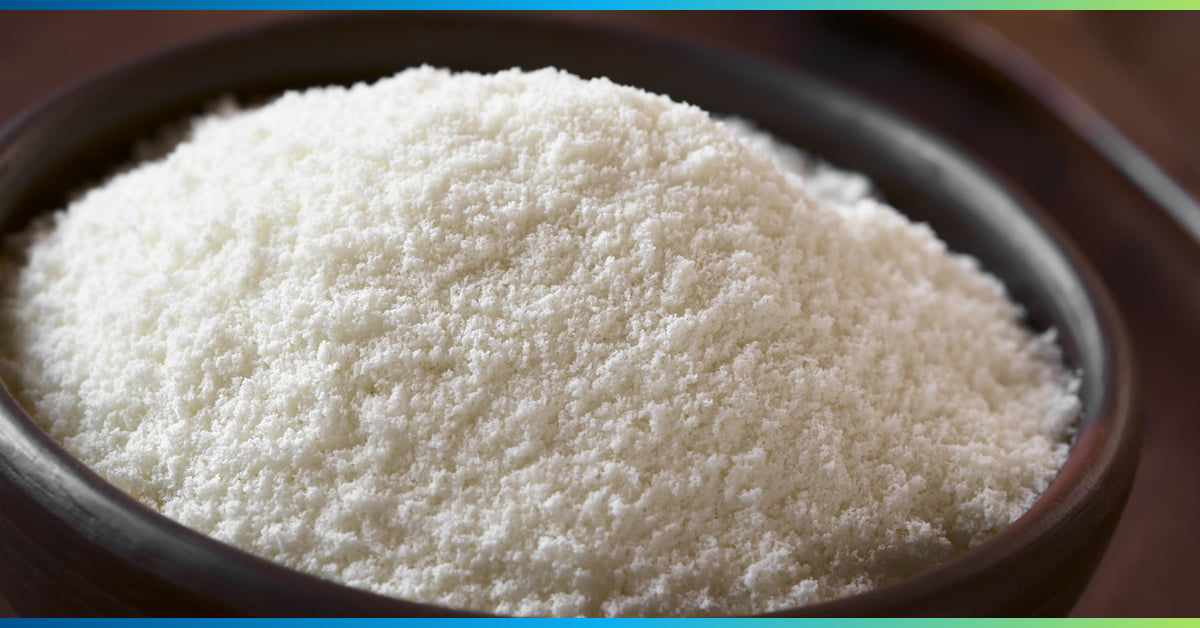
Cheese powder is a workhorse ingredient that turns up in ready meals, sauces, snacks, and biscuits, prized for its long shelf life and easy handling. But manufacturers have long grappled with a stubborn problem: cheese powder caking. Over time, fat on the surface of powder particles can form sticky bridges between them, clumping the powder together and affecting its flow and quality.
A new study published in Powder Technology takes a close look at exactly where this problematic fat sits, and what it's made of. Led by researchers at Aarhus University in collaboration with Lactosan A/S, the team combined microscopy, mass spectrometry, and spectral imaging with the VideometerLab to track how fat moves through the powder.
Why This Matters for Dairy Powder Exports
Denmark's dairy powder industry is a major export success story, but growth increasingly depends on reaching markets with demanding supply chains, including long transit times through fluctuating temperatures and humidity. Right now, there's no reliable way for the industry to predict how a powder's quality will hold up under those conditions. Understanding the fine details of fat behavior in cheese powder, as this study does, is a piece of that larger puzzle.
Getting to the Bottom of "Free Fat"
Not all the fat in a cheese powder particle is created equal. Some of it is properly encapsulated by protein during spray drying. But some escapes that protective structure and ends up as free fat, either right on the surface of the particle, or tucked inside its pores. Surface free fat is the real troublemaker: it's what forms the sticky bridges that lead to caking.
The researchers tested four different cheese powders (cream, cream with emulsifying salt, cheddar, and gouda) using a step by step solvent washing method, gradually pulling fat off the powder to see how much came from the surface versus the interior. Two solvents, heptane and petroleum ether, were compared, with heptane emerging as a solid, less toxic alternative to more commonly used options.
To confirm what was actually happening to the powder as fat was washed away, the team turned to a few complementary tools: confocal microscopy to visually track fat inside the particles, and mass spectrometry based lipidomics to profile exactly which fat molecules were present.
The Role of Spectral Imaging and the VideometerLab
While microscopy and lipidomics gave the researchers a detailed, close up view of where the fat sat and what it was made of, those methods are time consuming and destructive to the sample. This is where spectral imaging earned its place in the study. Using the VideometerLab, the team captured multispectral images of each cheese powder sample after every washing step, measuring its color in detail across the visible spectrum and beyond, rather than relying on the naked eye.
From these images, the researchers calculated the standard color components lightness (L*), redness to greenness (a*), and yellowness to blueness (b*), and used them to track the total color change (ΔE) of each powder as fat was progressively removed. As surface free fat is stripped away, the powder becomes visibly lighter and less yellow. Because this shift in color reflects a real change in the surface composition of the particles, it gave the researchers a fast, non destructive, and quantifiable way to confirm exactly when surface fat had been removed, without needing to run a microscopy or lipidomics analysis at every single step.
The color data lined up closely with what the microscopy images showed directly. For all four cheese powders, color changed rapidly over the first four washes, then leveled off, matching the point at which surface free fat had been fully removed and extraction shifted to the fat found deeper inside the particles. In this way, spectral imaging acted as a practical, scalable checkpoint that supported and reinforced the more detailed structural and chemical findings from the rest of the study, showing how VideometerLab technology can help characterize fat distribution in dairy powders quickly and without destroying the sample.
What They Found
- Surface versus inner free fat: depending on the cheese powder type, 55 to 67% of total fat was identified as surface free fat, with another 15 to 20% as inner free fat.
- Washing needed: four washes were enough to remove the surface fat responsible for caking, and three more washes reached the fat further inside the particle.
- Fat composition: the fat's molecular makeup didn't differ between surface and inner fractions, but it did vary by cheese type. Cream based powders contained more unsaturated fat molecules, while cheddar and gouda powders leaned towards being more saturated.
- Spectral imaging results: color change was greatest during the first four washes, when surface free fat was being removed, and then flattened out once extraction moved into the inner free fat, closely matching the microscopy findings.
- Powder specific patterns: powders with less overall fat, such as gouda and cheddar, showed smaller color changes throughout, in line with their lower surface free fat to powder ratio, while cream-based powders showed the largest shifts.
Looking Ahead
This kind of detailed characterization work, looking not just at how much free fat is present but at where it sits and what it's made of, helps build a fuller picture of why dairy powders behave the way they do during storage and handling. The study also highlights how much value spectral imaging can add alongside more traditional analytical methods: it is fast, requires minimal sample preparation, and can be scaled up far more easily than microscopy or mass spectrometry, making it a promising tool for monitoring fat distribution in dairy powders on a routine basis.