How the VideometerLite+ measures color that holds up under any light, plus industry news, a software spotlight, and upcoming events.
Videometer Quarterly
We measure what you see - and beyond
09
2026
Introduction
This month, we're looking at why the same sample can measure as a different color under different lighting, and how the VideometerLite+ solves this by capturing a full color reading across every point on a sample instead of a single average. We also cover recent research spanning seed biopriming, chicken freshness and origin detection, and microplastics analysis, take a closer look at our subscription classification models, and share where you can meet us this September.
Read on for the full stories.
Top Story
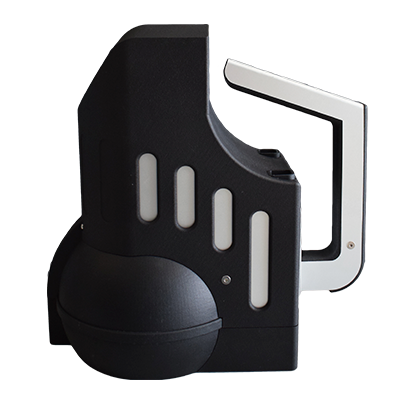
How the VideometerLite+ measures color that holds up under any light
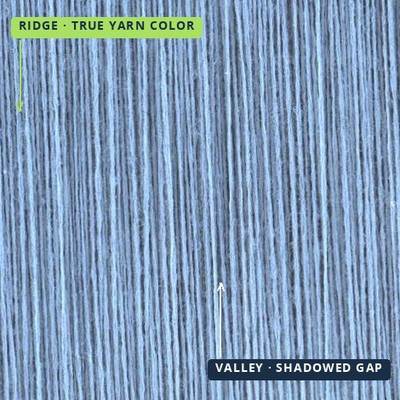
Two samples can measure as identical under one light and look completely different under another. This effect, called metamerism, is a common source of color complaints in manufacturing and quality control, and it's the focus of a new Videometer paper, Measuring Color As It Really Is.
Standard colorimeters take a single point reading, which works fine for a flat panel but hides the natural variation in samples like seeds, fabric, meat, or powders. The VideometerLite+ instead calculates a full color value at every point across the sample, revealing an overall color reading plus how much that color actually varies, instead of averaging the differences away.
How multispectral imaging supports biopriming research
Seed biopriming coats seeds with helpful bacteria before planting, but confirming how well the coating sticks has usually meant guesswork. A study published in Scientific Reports, from researchers at the University of Pavia, Aarhus University, the University of Sfax, and the Agricultural University of Athens, used the VideometerLab4 to tell coated and uncoated legume seeds apart by how they reflect light, no cutting or staining required. Three wavelengths sensitive to chlorophyll consistently revealed the bacterial layer, offering a faster, non destructive way to develop seed treatments.
VideometerLab helps NIVA protect waters from microplastics
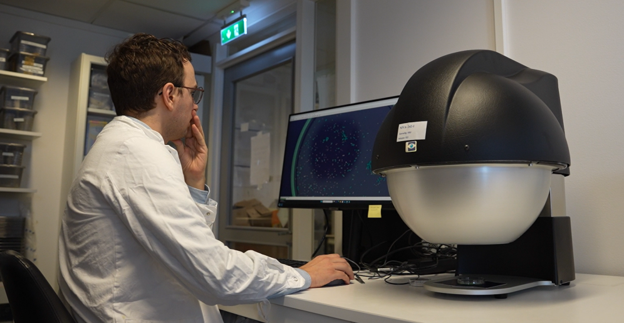
At the Norwegian Institute for Water Research (NIVA), the VideometerLab has supported several recent studies, from classifying paint flakes on ship decks to checking for tyre particles in mussel tissue. Sverre Hjelset, Head Engineer at NIVA, says analyses that once took days can potentially be completed within minutes once a suitable algorithm is validated, with the machine learning capabilities opening up new possibilities for automated particle classification. In early testing for the EU funded PAPILLONS project, the system analyzed soil samples with roughly a 10 percent error rate, compared to several days per sample with manual methods.
VideometerLite+ detects chicken freshness and origin
A peer reviewed study in Sensors, led by the Agricultural University of Athens and building on the TraceMyFish project, tested whether a single portable multispectral scan can assess chicken freshness, detect previously frozen product, and verify geographic origin all at once. Origin classification proved strongest, with several models reaching 100 percent accuracy between Greek and Danish samples, while freshness and thaw detection also performed well across two independent labs using the same prototype instrument, now known as VideometerLite+.
Videometer offers subscription classification models that let you analyze the features of your commodity products quickly, objectively, and reliably. The models are continuously updated and trained to keep grain analysis accurate over time, giving global seed and grain industries a standardized, high-performance analytical foundation. Because these AI-driven models are already engineered for common grain applications, there's no need for custom development, so you can deploy them right away.